

/image%2F1034110%2F20221028%2Fob_0c2a43_thumbnail-13.jpeg)
St Vincent and the Grenadines prepares to confront dark history of slavery in court
 Email
Email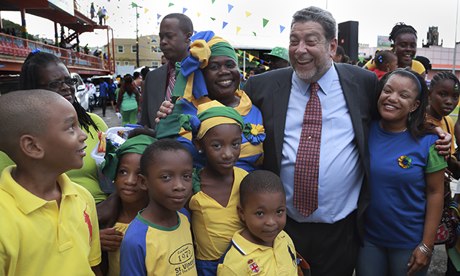
St Vincent and the Grenadines. A string of islands that stands out in Caribbean holiday brochures as the destination with the most turquoise of waters, the most pristine of white-sand beaches. Home to the ultra-exclusive private island and celebrity hangout Mustique. Yachting paradise. A population of only 110,000.
Now it is becoming the perhaps unexpected centre of a pan-Caribbean move to redress one of the great horrors of the 19th century: the transatlantic slave trade.
"It is the defining matter of our age," says the prime minister, Ralph Gonsalves, as he peers out towards the Atlantic from the veranda of his family's secluded villa, in the grounds of an old plantation, on the main island, St Vincent.
The outspoken 67-year-old, who often refers to himself as "Comrade Ralph", has been in office for almost 13 years. He says his attempt to seek not only an apology but money from those European powers that built fortunes through the trafficking of slaves across the ocean in front of him is his moral duty. And it is one he pledges to devote his energies to as he prepares to assume the leadership of Caricom, the organisation that unites the key Caribbean states.
"We believe we have the facts on our side. We believe we have the law on our side," he tells the Observer. "International law is there to resolve disputes between strong states and weaker ones."
For several decades, activists, academics and cultural leaders have sought compensation from European governments for the role they played in taking slaves from central and west Africa, packing them in gruesome conditions in ships and forcing those that survived the journey to work in the hugely profitable sugar plantations of the Caribbean.
To date, those efforts have not succeeded. But last June supporters of the reparation movement were emboldened by a £19.9m out-of-court payment made by the UK to victims of British colonial forces in Kenya. Lawyers had argued that Britain was legally responsible for the brutal suppression and torture carried out against the anti-colonial group the Mau Mau in the 1950s. The foreign secretary, William Hague, publicly expressed regret for the abuses, although the UK government never formally accepted responsibility for the actions of the administration in Kenya.
Now Gonsalves has instructed Leigh Day, the same London law firm that acted for the former Mau Mau, to represent Caricom in a joint action against the UK, France and the Netherlands. He says that, while other countries may have been involved, the European countries cited were "the main culprits".
SUITE :link


/https%3A%2F%2Fi.ytimg.com%2Fvi%2FeOinX1F1rxk%2Fhq2.jpg)
/https%3A%2F%2Fi.ytimg.com%2Fvi%2FKWuTozloX90%2Fhq2.jpg)
/https%3A%2F%2Fi.ytimg.com%2Fvi%2Fs_vq_H7pew8%2Fhqdefault.jpg)
/https%3A%2F%2Fwww.legrandsoir.info%2FIMG%2Flogo%2Frubio_trump.webp)
/https%3A%2F%2Fi.ytimg.com%2Fvi%2FODg2eKnl4Ys%2Fhqdefault.jpg)
/https%3A%2F%2Fi.ytimg.com%2Fvi%2FR66fhcoBdXs%2Fhqdefault.jpg)
/image%2F1034110%2F20260919%2Fob_9f63f6_mail.jpeg)
/image%2F1034110%2F20260919%2Fob_1983de_mail-1.png)
Commenter cet article