

/image%2F1034110%2F20221028%2Fob_0c2a43_thumbnail-13.jpeg)
Four years after the earthquake, I visited Haiti to record what progress had occurred, and how ordinary people are coping with endemic deprivation
 Email
Email
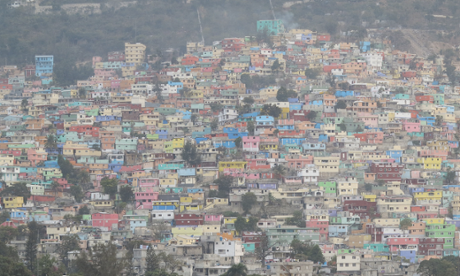 Urban botox: the painted slums of Jalousie. Photograph: Antony Loewenstein
The mood in Port au Prince’s flashiest hotel was cautiously optimistic. A business conference was held this January at the Karibe Hotel with a range of local and international businesspeople. Called Restore Haiti, the event was held more than four years after the devastating 2010 earthquake that left the capital in ruins and killed up to 200,000 people. There, delegates heard about the myriad of ways to make money in the Caribbean nation.
One of the first speakers was George Andy Rene, managing director of the official body Investment Facilitation Centre. He repeated the popular government mantra since taking office in 2011: “Haiti is open for business”. “We need to counter the negative image of Haiti in the global media”, he said. However, Texan Christian entrepreneur Fred Eppright, of Bridge Capital, issued a blunt warning: the international image of Haiti remains dire and in desperate need of improvement. By all means support Haiti, he argued, but be aware of the risks.
A dynamic and increasingly thriving Haiti is one the US-backed government wants the world to see. President Michel Martelly and prime minister Laurent Lamothe, whose faces are plastered across billboards and propaganda material throughout the country, are close to the Obama administration and have benefitted from their association withHillary Clinton when she was secretary of state. For example, some industrial parks were built thanks to US funds; the much-heralded one in the north of Haiti, at Caracol, has fallen far short of official expectations.
This doesn't stop the US from continuing to push the tired and failing economic model of low paying textile factories to fill the stores of its own country; after decades of advocating the same ideas, without success, it shows the weakness of the Haiti state that its leaders continue to agree to it.
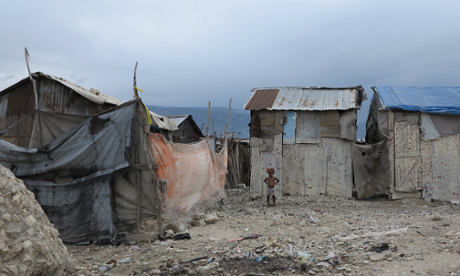 A child in one of Haiti's slum. Photograph: Antony Loewenstein
After the 2010 earthquake, billions of dollars from across the world were pledged to the country and yet the vast bulk of this money never reached Haiti, remaining in the pockets of inefficient foreign contractors. As I documented in my 2013 book Profits of Doom, Haiti has suffered both decades of brutal dictatorship and Washington-based policies that alienated workers, slashed wages and cemented permanent poverty.
I returned to Haiti in January with New York film-maker Thor Neureiter tofilm footage for a documentary about disaster capitalism. I wanted to see what progress, if any, has occurred in the last years and how ordinary people are coping with endemic deprivation. Are they gaining from the government’s aggressive pro-business approach? Although there areundoubtedly signs of progress, including new housing, a modern airport and a private university, the vast bulk of citizens never experience any of it and told me government services are invisible to them.
SUITE :link
Faut lire les commentaires ...Pas tendres du tout avec Haïti et les Haïtiens.
Il y a bien évidemment le refrain de la faute à l'indépendance, la faute au vodou et l'ensemble des arguments usités et usés , plus une bonne dose de racisme, qui masquent le poids des politiques imposées par les Occidentaux (embargo, dette de l'indépendance, occupations, soutien aux régimes réactionnaires, destruction de l'agriculture, plan Collier etc) et posent sur le dos des Haïtiens la responsabilité pleine et entière du désastre actuel et passé, comme si, pour de bon, Haïti avait été depuis son indépendance maîtresse de sa politique économique.
Malgré tout dans ce flot de désinformation et de mésinformation quelques personnes semblent connaître le dessous des cartes.
Souvent, on oppose la "réussite " de la RD à l"échec" d'Haïti; il faut rappeler que la RD n'a pas mené une guerre anti-esclavagiste et d'indépendance qui, évidemment, a déséquilibré l'économie coloniale saint-dominguoise
Ensuite, pour parler de l'époque plus récente, le système néolibéral imposé à Haïti a été le plus violent qui existe dans l'ensemble de la Caraîbe. La RD, par exemple, n'a pas eu droit à l'abattage de ses cochons, ni au dumping du riz, ni à un abaissement aussi radical des taxes sur les produits importés.
L'Etat de la RD n'a pas été saccagé d'une manière aussi radicale qu'en Haïti par les privatisations. Et ça, ça fait une différence énorme au niveau de l'économie.
Haïti est le pays de la Caraïbe dans lequel on compte le plus haut taux d'analphabètes et le plus grand nombre d'écoles privées. C'est logique ça ? Oui logique pour alimenter un certain marché, fabriquer un haut taux de chômeurs et de travailleurs bon marché, candidats à l'émigration qui s'en iront enrichir les entreprises avides de ces travaileurs pour presque rien, et booster l'économie des pays où ils émigrent.
Un autre exemple, quel est le pays d' A Latine (à part le Suriname) ou de la Caraïbe qui aurait pu se retrouver avec à sa tête un président avec le profil de Martelly?
Aucun. Mais aussi qui a mis Martelly à cette place et pourquoi ?
Mon commentaire préféré succinct et sardonique :
"Haiti has not had a functioning state for years-the government exists to extract wealth from the 95 percent to benefit the 5 per cent.There is not, was not and never has been any welfare state, or powerful trade unions,or state planning. In short, the country has been a small state, low tax, deregulated, privatised haven for decades. We will know when this policy works , when we see Scandinavians flooding into Haiti, El Salvador, Guatemala,etc. in search of higher living standards and greater civil liberties. "


/image%2F1034110%2F20260919%2Fob_9f63f6_mail.jpeg)
/https%3A%2F%2Fi.ytimg.com%2Fvi%2FOZasDbtvMDc%2Fhqdefault.jpg)
/https%3A%2F%2Fi.ytimg.com%2Fvi%2FfIxW74h59tw%2Fhqdefault.jpg)
/https%3A%2F%2Fi.ytimg.com%2Fvi%2Fj9em8N1MRME%2Fhq2.jpg)
/https%3A%2F%2Fi.ytimg.com%2Fvi%2FR66fhcoBdXs%2Fhqdefault.jpg)
/image%2F1034110%2F20260919%2Fob_9f63f6_mail.jpeg)
/image%2F1034110%2F20260919%2Fob_1983de_mail-1.png)
/https%3A%2F%2Fi.ytimg.com%2Fvi%2FruC6bOChuDs%2Fhqdefault.jpg)
Commenter cet article