

/image%2F1034110%2F20221028%2Fob_0c2a43_thumbnail-13.jpeg)
Laissez-moi vous dire que j'ai beaucoup aimé cet article signé par Isabeau Doucet- au passage jolis noms- qui recrèe et présente avec simplicité, tendresse et ironie, le drame de la vie quotidienne de la population. Souvent, les écrits sur Haïti des femmes journalistes, à quelque pays qu'elles appartiennent, sont beaucoup plus justes, moins racoleurs-spectaculaires que ceux de leurs collègues du sexe masculin qui semblent ne s'informer que du côté des zentellectuels primés/surprimés, comprimés/déprimés et donc ont tendance à répéter les mêmes expressions telles que "orgie de violence" ou "île maudite" vues un nombre incalculable de fois sur Mediapart, le Point, le Figaro, Libération, l'Express et tous les autres journaux qui s'abreuvent aux mêmes sources réactionnaires depuis 2004.
et
Haiti's hard road to recovery
Two years after the earthquake life is improving, but the nation still faces a cholera epidemic and a huge rebuilding challenge
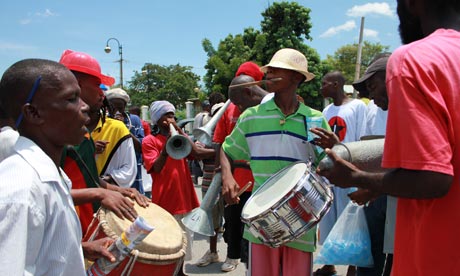
Haïti ne peut pas être plus éloignée de l'orgie de violence à laquelle on l'associe à travers le monde.
In Haiti, you'll see a young man sitting on a crumbled wall blasting a song out of a bashed-up radio and singing along – apparently without irony – lyrics that just repeat "I love my life". You'll see a woman trying to peddle half-rotten papayas from a basket on her head, dancing to kompa on a pile of sewage-soaked rubble and trash. You'll see a barefoot six-year-old boy flying a homemade kite wearing a T-shirt that says "Save Darfur". You can be sure that if your motorcycle, car or SUV breaks down in the potholes of Port-au-Prince, any one of these folks will bend over backwards to help, rather than pose any threat to your safety.
What's remarkable about Haiti is that despite the devastating earthquake, tent camps, cholera, political instability and chronically corrupt and neglected judicial institutions, it couldn't be further from the orgy of violence people around the world associate with it. The United Nation's latest homicide statistics show that Haiti is one of the least dangerous places in the Caribbean region with a murder rate on a par with the US.
This is encouraging news, but it begs the question: what is the world's third-largest UN peacekeeping mission – the only one in the Americas – doing there? They have been there for over seven years with no apparent exit strategy: the UN's blue helmets peep out of white armoured personnel carriers; Brazilian riot police patrol tent camps with weapons drawn; French gendarmes fire tear gas at peaceful demonstrators whenever they're deemed a threat. No, the real violence of Haiti is its continuing lack of civic infrastructure, to the extent that people are dying every day of diseases to which most countries waved goodbye in the 19th century; of failed economic policies imposed from abroad like a laboratory experiment.
Sources : link


/idata%2F0515804%2FPhotos-3%2Fgaspard-et-d.jpg)
/image%2F1034110%2F20250131%2Fob_5a1028_th-1-jpg.png)
/https%3A%2F%2Fi.ytimg.com%2Fvi%2FS5vYlnMObhc%2Fhqdefault.jpg)
/image%2F1034110%2F20250111%2Fob_8775db_th-17-jpg.png)
/https%3A%2F%2Fi.ytimg.com%2Fvi%2FODg2eKnl4Ys%2Fhqdefault.jpg)
/https%3A%2F%2Fi.ytimg.com%2Fvi%2FR66fhcoBdXs%2Fhqdefault.jpg)
/image%2F1034110%2F20260919%2Fob_9f63f6_mail.jpeg)
/image%2F1034110%2F20260919%2Fob_1983de_mail-1.png)
Commenter cet article